tree in bud opacities
The purpose of this study was to determine the relative frequency of causes of TIB opacities and identify patterns of disease associated with TIB opacities. Sarcoidosis another common disease typically shows small nodules in perilymphatic distribution.
2
These small clustered branching and nodular opacities represent terminal airway mucous impaction with adjacent peribronchiolar inflammation.

. The most common CT findings are centrilobular nodules and branching linear and nodular opacities. The tree-in-bud pattern suggests active and contagious disease especially when associated with adjacent cavitary disease within the lungs. The purpose of this study was to determine the relative frequency of causes of tib opacities and identify patterns of.
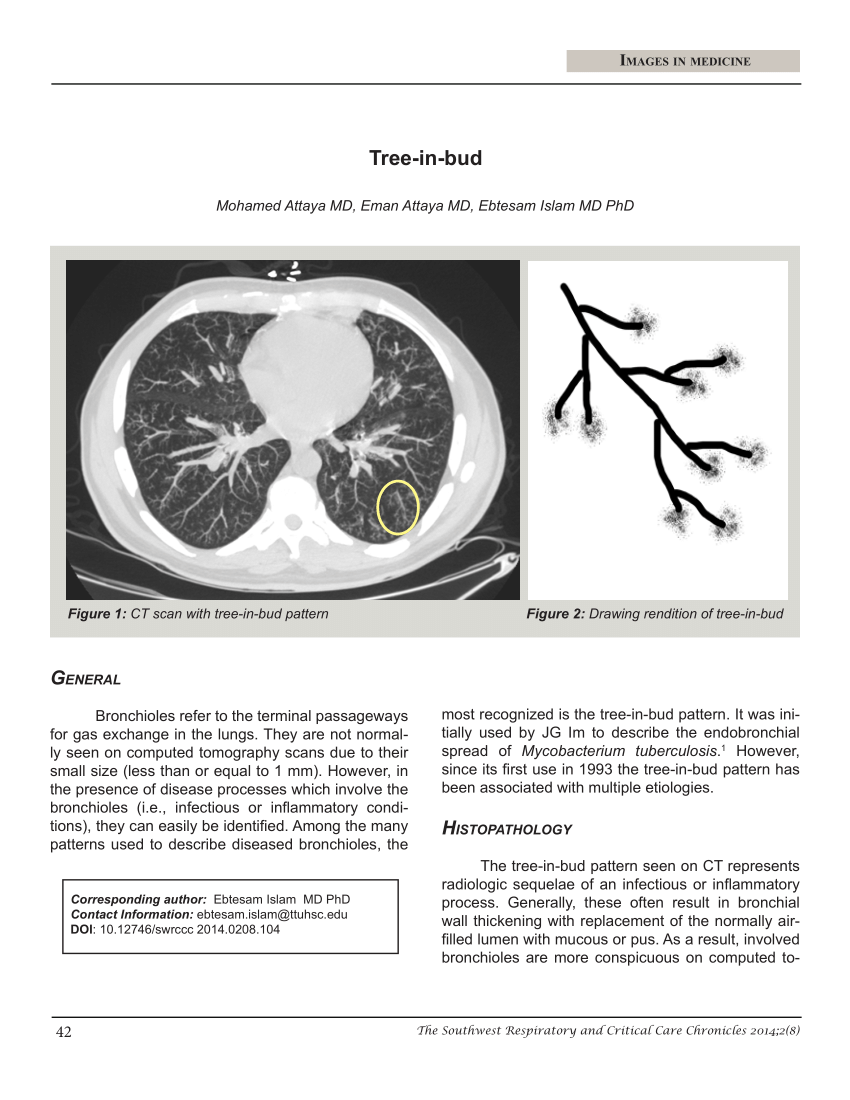
In the hospital MTB cannot be missed. 1 direct filling of the centrilobular arteries by tumor emboli and 2 fibrocellular intimal hyperplasia due to carcinomatous. Tree in bud opacification refers to a sign on chest ct where small centrilobular nodules and corresponding small branches simulate the appearance of the end of a branch belonging to a tree that is in bud.
TIB opacities are also associated with bronchiectasis and small airways obliteration resulting in mosaic air trapping. However in some cases nodules occurring in relation to centrilobular arteries may mimic the appearance of the tree-in-bud pattern. Multiple causes for tree-in-bud TIB opacities have been reported.
Tree-in-bud TIB opacities are a common imaging finding on thoracic CT scan. Bronchiolitis is characterized at thin-section CT by the presence of centrilobular nodules and linear branching opacities producing a tree-in-bud appearance Fig 7 4. In radiology the tree-in-bud sign is a finding on a CT scan that indicates some degree of airway obstruction.
11 TIB opacities represent a central imag- Background. In the hospital mtb cannot be missed. 32 rows Tree-in-bud TIB opacities are a common imaging finding on thoracic CT scan.
The latter etiology is often overlooked but is important to consider in patients with a cancer history to avoid delays in diagnosis and treatment. What does tree-in-bud opacities mean. However to our knowledge the relative frequencies of the causes have not been evaluated.
A young male patient who had a history of fever cough and respiratory distress presented in the emergency departmen. Nodular opacities with tree-in-bud appearance can be associated with other changes in lung parenchyma-such as thickening of the bronchial walls consolidations andor areas of. However BAC can occasionally show tree-in-bud pattern ground-glass opacities or crazy-paving pattern.
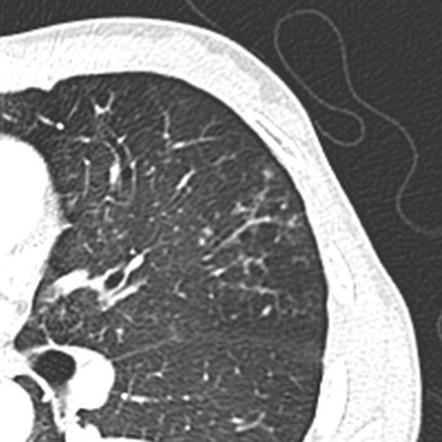
8081 On CT the tree-in-bud pattern manifests as small 24 mm centrilobular well-defined nodules connected to linear branching opacities that. The tree-in-bud sign is a nonspecific imaging finding that implies impaction within bronchioles the. Radiology scientific expert review panel.
Fungal hyphae are often found in the airway lumen Fig 7c. Although initially described in 1993 as a thin-section chest CT finding in active tuberculosis TIB opacities are by. Tree in bud opacities treatment.
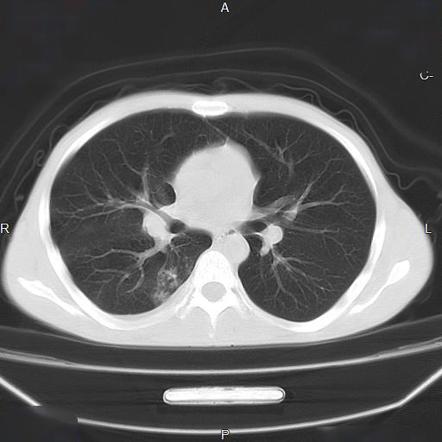
Other more rare entities that can manifest in this pattern include. This tree-in-bud pattern is due to the presence of caseation necrosis and granulomatous inflammation within and surrounding the terminal and respiratory bronchioles and alveolar ducts reflecting endobronchial spread of tuberculosis. Tree in bud opacification refers to a sign on chest CT where small centrilobular nodules and corresponding small branches simulate the appearance of the end of a branch belonging to a tree that is in bud.
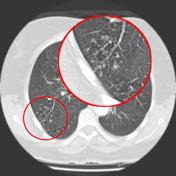
The tree-in-bud sign is a nonspecific imaging finding that implies impaction within bronchioles the smallest airway passages in the lung. Tree in bud opacification refers to a sign on chest ct where small centrilobular nodules and corresponding small branches simulate the appearance of the end of a branch belonging to a tree that is in bud. Tree-in-bud TIB opacities are a common imaging finding on thoracic CT scan.
Originally and still often thought to be specific to endobronchial Tb the sign is actually non-specific and is the manifestation of pus mucus fluid or other. The tree-in-bud sign can be commonly caused by respiratory infections including that of mycobacterial bacterial and viral causes. The most common CT findings are centrilobular nodules and branching linear and nodular opacities.
Malignancy can be associated with the tree-in-bud sign. Multiple causes for tree-in-bud TIB opacities have been reported. Clinical manifestations include acute tracheo-bronchitis bronchiolitis and bronchopneumonia.
The pattern of the tree correlates to an intralobular inflammatory bronchiole and the bud correlates to inflammatory filling in alveolar ducts. Intravascular pulmonary tumor embolism often occurs in cancers of the breast liver kidney stomach prostate and ovaries and can lead to the tree-in-bud sign in HRCT 214. While the tree-in-bud appearance usually represents an endobronchial spread of infection given the proximity of small pulmonary arteries and small airways sharing branching morphology in the bronchovascular bundle a rarer cause of the tree-in-bud sign is infiltration of the small pulmonary arteriesarterioles or axial interstitium 367.
We here describe an unusual cause of TIB during the COVID-19 pandemic. TIB opacities represent a normally invisible branches of the bronchiole tree 1 mm in diameter that are severely impacted with mucous pus or fluid with resultant dilatation and budding of the terminal bronchioles 2 mm in diameter1 photo. A young male patient who had a history of fever cough and respiratory distress presented in the emergency departmen.
Multiple causes for tree-in-bud TIB opacities an imaging pattern usually seen on chest CT have been reported. The tree-in-bud sign is a nonspecific imaging finding that implies impaction within bronchioles the smallest airway passages in the lung. In radiology the tree-in-bud sign is a finding on a CT scan that indicates some degree of airway obstruction.
Uncommonly this pattern can be seen in other entities that cause luminal impaction bronchiolar dilatation or wall thickening including cystic fibrosis immune deficiency inflammatory bowel disease and diffuse panbronchiolitis. Bronchial cystazygoesophgeal recesstypical location. The tree-in-bud sign has been described in cases of acute aspiration 13.
Tree-in-bud TIB appearance in computed tomography CT chest is most commonly a manifestation of infection. However to our knowledge the relative frequencies of the causes have not been evaluated.

Tree In Bud Sign And Bronchiectasis Radiology Case Radiopaedia Org
Tree In Bud Sign Lung Radiology Reference Article Radiopaedia Org
2

Hrct Scan Of The Chest Showing Diffuse Micronodules And Tree In Bud Download Scientific Diagram
2
Tree In Bud Pattern Radiology Case Radiopaedia Org

Tree In Bud Sign Lung Radiology Reference Article Radiopaedia Org
2
View Of Tree In Bud The Southwest Respiratory And Critical Care Chronicles

References In Causes And Imaging Patterns Of Tree In Bud Opacities Chest

Tree In Bud Sign Lung Radiology Reference Article Radiopaedia Org
Tree In Bud Sign Lung Radiology Reference Article Radiopaedia Org

References In Causes And Imaging Patterns Of Tree In Bud Opacities Chest

Tree In Bud Pattern Radiology Case Radiopaedia Org

Chest Ct With Multifocal Tree In Bud Opacities Diffuse Bronchiectasis Download Scientific Diagram
Tree In Bud Sign Lung Radiology Reference Article Radiopaedia Org
2

Pdf Tree In Bud Semantic Scholar
Pdf Tree In Bud
